The rapid expansion of satellite broadband has emerged as one of the most transformative developments in global telecommunications. As millions of people worldwide continue to face limited or unreliable internet access, particularly in remote and underserved communities, satellite networks offer a powerful solution to bridge digital divides. Traditional broadband infrastructure often fails to reach isolated regions due to the high costs and geographical challenges of deploying fiber-optic or cable networks. Satellite-based technologies, however, enable high-speed connections almost anywhere on Earth, supporting widespread improvements in rural connectivity and empowering communities through enhanced internet access.
With the rise of low-Earth orbit (LEO) satellite constellations, internet speeds have increased significantly while latency has decreased, making satellite-based solutions far more competitive with terrestrial services. This shift opens new opportunities for education, healthcare, commerce, and public services in regions previously excluded from the digital economy. As satellite technologies continue evolving, they will play an increasingly pivotal role in advancing global digital inclusion.
This article explores the advancements in satellite broadband, their implications for rural development, and the future of global connectivity. By expanding reliable internet access to even the most remote locations, satellite networks are reshaping social and economic landscapes.
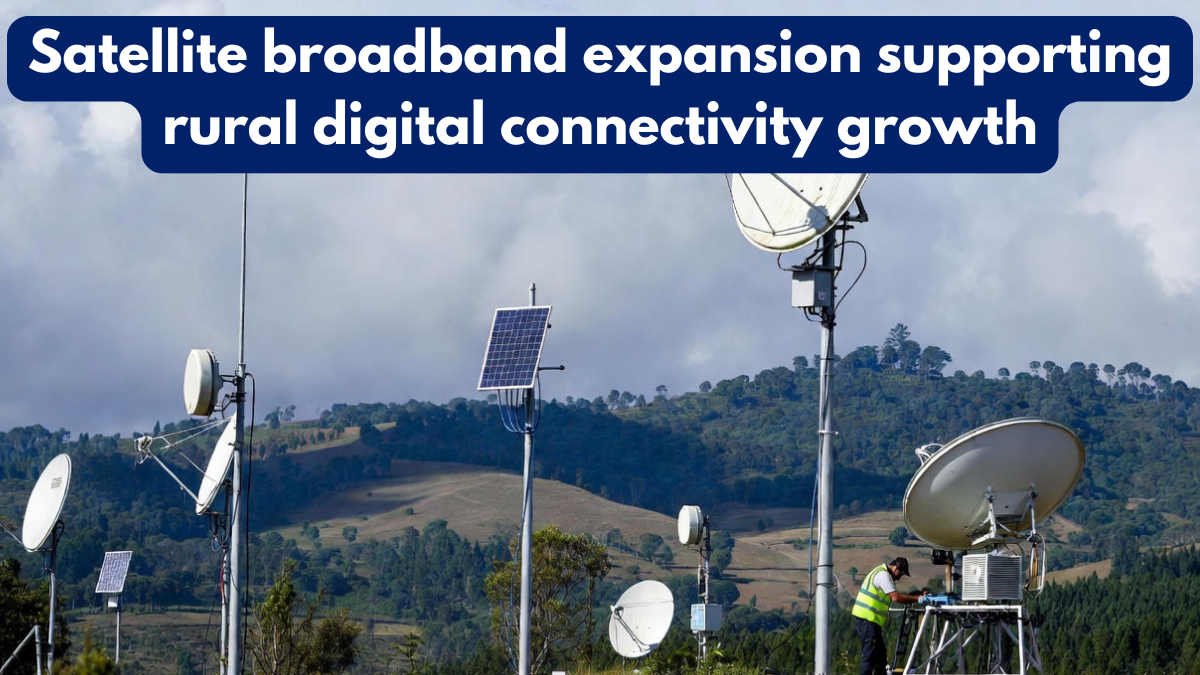
The Need for Reliable Connectivity in Rural Regions
Despite rapid digitalization worldwide, large populations still lack adequate internet access. In many rural regions, physical barriers such as mountains, forests, or deserts make traditional broadband deployment difficult and costly. Even when infrastructure exists, service quality may be poor due to low bandwidth capacity or aging equipment. These challenges limit access to critical digital services, affecting everything from healthcare appointments to online education and small business operations.
The expansion of satellite broadband addresses these challenges by bypassing the need for extensive ground infrastructure. Instead of relying on physical cables, satellites deliver signals directly to user terminals, enabling high-quality connectivity regardless of location. This is especially transformative for agricultural communities, remote islands, Indigenous territories, and developing regions striving to engage with the digital economy.
Improving rural connectivity not only enhances individual well-being but also supports broader economic growth, reducing regional inequalities and creating more inclusive communities.
How Satellite Broadband Works and Its Advancements
Historically, satellite internet relied on geostationary (GEO) satellites positioned high above Earth. While effective, these systems often experienced high latency, limiting the performance of real-time communication tools. Recent advancements have introduced low-Earth orbit (LEO) constellations operating much closer to the surface, drastically improving speed and responsiveness.
Below is a table outlining key satellite systems and their contributions to expanding internet access and rural connectivity:
| Satellite System Type | Altitude | Key Advantages | Impact on Rural Connectivity |
|---|---|---|---|
| GEO Satellites | ~36,000 km | Wide coverage, fewer satellites needed | Provides basic coverage in remote regions |
| MEO Satellites | 2,000–20,000 km | Intermediate latency, regional coverage | Supports mid-range services with improved performance |
| LEO Satellites | 500–2,000 km | Low latency, high speed, large constellations | Enables high-quality broadband in underserved areas |
| Hybrid Networks | Combination of GEO, MEO, LEO | Flexible, scalable infrastructure | Provides reliable and cost-effective connectivity |
These systems collectively enhance the efficiency, reach, and reliability of satellite broadband, making it a practical solution for global digital challenges.
Economic and Social Benefits of Satellite Broadband
Expanding satellite broadband offers substantial social and economic benefits, particularly for remote and rural regions. Improved internet access enables students to participate in online learning, access research resources, and engage in digital collaboration. For healthcare providers, telemedicine becomes more accessible, allowing rural families to receive medical consultations without traveling long distances.
Enhanced rural connectivity also supports economic development. Farmers can access real-time weather data, market prices, and precision agriculture tools. Small businesses can expand their markets through e-commerce, while local governments can streamline administrative services through digital platforms.
In addition, satellite connectivity supports emergency response systems, ensuring that remote communities can communicate during natural disasters or crises. By strengthening social resilience and economic opportunity, satellite broadband contributes significantly to long-term rural development.
Challenges to Satellite Broadband Adoption
Despite its advantages, satellite broadband adoption faces several hurdles. One significant challenge is cost. User terminals and subscription fees may be expensive for low-income households or small rural businesses. Additionally, weather conditions such as heavy rain or storms can temporarily affect signal quality, especially in older satellite systems.
Infrastructure for distributing satellite signals within a community—such as local Wi-Fi hubs or public access points—also requires investment. To maximize internet access, governments and organizations must work together to ensure affordable pricing, subsidized equipment, and equitable distribution systems.
Another challenge is orbital congestion. As more LEO satellites are deployed, managing space traffic becomes increasingly important to avoid collisions and interference. Strong international regulations will be essential to support sustainable growth and reliable rural connectivity through satellite networks.
The Future of Satellite Broadband and Global Digital Inclusion
Looking forward, the future of satellite broadband is extremely promising. Technological advancements, including phased-array antennas, inter-satellite laser links, and expanded LEO constellations, will further improve speed, coverage, and reliability. As systems scale, costs are expected to decrease, making satellite solutions more accessible worldwide.
Governments and telecommunications providers are also integrating satellite networks into national broadband strategies, recognizing their essential role in bridging rural gaps. Public-private partnerships will play a central role in expanding digital infrastructure and ensuring inclusive internet access for all.
Ultimately, satellite broadband will be a cornerstone of global digital inclusion. By connecting remote regions, supporting innovation, and enabling equitable participation in the digital economy, these technologies contribute to a more connected, informed, and prosperous world.
Conclusion
Satellite broadband represents a transformative solution for expanding digital connectivity, especially in remote and underserved regions. By strengthening rural connectivity and improving access to essential online services, satellite networks play a critical role in global development. As technology evolves and infrastructure expands, satellite broadband will continue driving progress in education, healthcare, commerce, and community resilience. Ensuring affordable and reliable internet access for all is key to building more inclusive and sustainable digital futures.
FAQ
How does satellite broadband improve rural connectivity?
It delivers high-speed internet to remote areas without the need for physical network infrastructure.
Are LEO satellites better for internet access?
Yes, LEO satellites offer lower latency and faster speeds compared to older GEO systems.
Is satellite broadband reliable during bad weather?
Weather can affect performance, but modern systems are increasingly resilient.
Can satellite broadband support telemedicine and online learning?
Absolutely, it enables reliable access to digital services essential for healthcare and education.
Will satellite broadband become more affordable in the future?
Yes, expanding networks and technological advancements are expected to reduce costs over time.
Click here to know more.