Reusable packaging is rapidly gaining momentum as businesses across multiple industries seek practical solutions to reduce waste and improve operational efficiency. While grocery retail was among the earliest adopters, the scope of reusable packaging is now expanding into sectors such as e-commerce, manufacturing, hospitality, and pharmaceuticals. Rising concerns about sustainability, mounting regulatory pressure, and changing consumer expectations are accelerating this shift. At the same time, advances in logistics and tracking technologies are making reusable systems more viable at scale. Together, these forces explain why reusable packaging is no longer a niche concept but a growing pillar of the modern circular economy.
The Sustainability Push Driving Reusable Packaging Adoption
The global focus on sustainability has fundamentally changed how organizations think about packaging. Single-use materials contribute heavily to landfill waste and environmental degradation, prompting both consumers and policymakers to demand alternatives. Reusable packaging directly addresses these concerns by extending the lifecycle of materials and reducing the need for constant production of new packaging.
Beyond environmental benefits, reusable packaging supports corporate sustainability goals by lowering long-term material consumption and emissions. Companies embracing sustainability increasingly view reusable systems as strategic investments rather than cost burdens. As awareness grows, industries beyond grocery retail recognize that adopting reusable packaging strengthens brand credibility while aligning with broader environmental commitments.
Reusable Packaging And The Circular Economy Model
The expansion of reusable packaging is closely tied to the principles of the circular economy, which emphasizes reuse, regeneration, and waste reduction. Unlike linear models that rely on disposal, circular systems keep materials in use for as long as possible. Reusable packaging fits seamlessly into this approach by enabling multiple use cycles without sacrificing functionality or safety.
In a circular economy, packaging becomes an asset rather than waste. Businesses recover, clean, and redeploy containers, creating closed-loop systems that reduce dependency on raw materials. This shift requires collaboration across supply chains, but the payoff includes reduced costs, improved resource efficiency, and measurable progress toward sustainability targets.
Logistics Innovations Making Reuse Scalable
Historically, one of the biggest barriers to reusable packaging adoption was the complexity of reverse logistics. Collecting, transporting, and sanitizing used packaging required coordination and infrastructure that many businesses lacked. Recent innovations, however, have transformed these challenges into manageable processes.
Digital tracking, standardized container designs, and optimized transport routes have made logistics more efficient and predictable. Smart tracking systems allow companies to monitor packaging circulation, loss rates, and turnaround times. These advancements enable reusable packaging to function reliably across industries, supporting scalability and reinforcing its role within the circular economy.
Expansion Beyond Grocery Retail
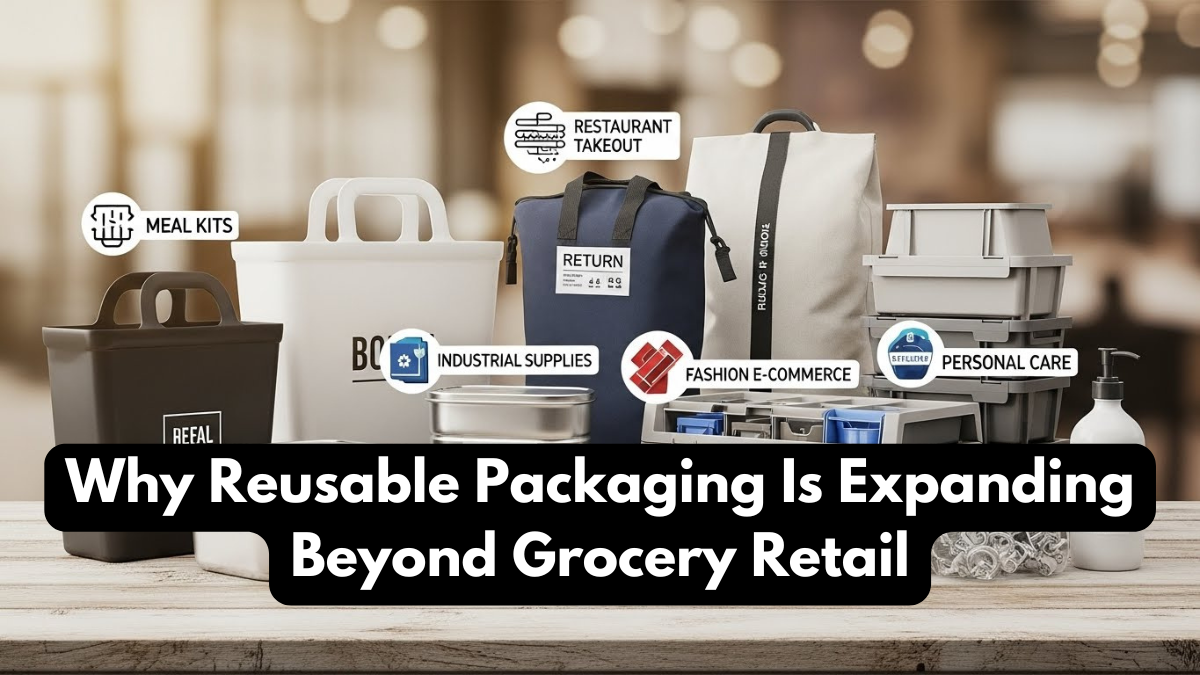
While grocery stores pioneered many reusable container programs, other sectors are now recognizing similar benefits. In e-commerce, reusable packaging reduces damage rates and return waste. In manufacturing, durable containers improve material handling efficiency. Hospitality and food service sectors use reusable systems to support sustainability initiatives without compromising hygiene.
This expansion reflects a broader realization that reusable packaging is adaptable. When supported by efficient logistics and aligned with circular economy principles, reuse models can outperform disposable alternatives in both cost and environmental impact. As more industries adopt these systems, shared infrastructure further accelerates adoption.
Business And Economic Advantages Of Reusable Packaging
Beyond environmental goals, reusable packaging offers compelling economic advantages. While initial investment costs can be higher, long-term savings often offset them through reduced material purchases and waste disposal fees. Predictable packaging lifecycles also simplify inventory planning and logistics coordination.
From a strategic perspective, companies using reusable packaging often gain competitive differentiation. Consumers increasingly favor brands that demonstrate commitment to sustainability and responsible practices. By participating in the circular economy, businesses strengthen resilience against regulatory changes and supply chain disruptions.
Key Drivers Behind The Growth Of Reusable Packaging
- Increasing focus on sustainability and waste reduction
- Alignment with circular economy principles
- Improvements in reverse logistics systems
- Rising regulatory and consumer pressure
- Long-term cost and efficiency benefits
Table: Industries Adopting Reusable Packaging And Key Benefits
| Industry | Application | Primary Benefit |
|---|---|---|
| Grocery Retail | Food containers | Waste reduction |
| E-commerce | Shipping boxes | Lower damage rates |
| Manufacturing | Material handling | Efficient logistics |
| Hospitality | Food service containers | Brand sustainability |
| Pharmaceuticals | Transport totes | Secure reuse cycles |
Challenges And Implementation Considerations
Despite its growth, reusable packaging adoption requires careful planning. Cleaning standards, container tracking, and return incentives must be clearly defined. Businesses must also educate partners and customers on participation to ensure system effectiveness.
However, these challenges are increasingly manageable with modern technology and collaboration. As shared networks develop, smaller businesses gain access to reusable systems without building infrastructure alone. This collective approach strengthens the circular economy and broadens the impact of reusable packaging initiatives.
Conclusion
The expansion of reusable packaging beyond grocery retail marks a significant shift in how industries approach packaging, waste, and resource use. Driven by sustainability goals, enabled by improved logistics, and grounded in circular economy principles, reusable systems offer both environmental and economic value. As adoption spreads across sectors, reusable packaging is proving to be a scalable, resilient solution that supports long-term business success while reducing environmental impact.
FAQs
What is reusable packaging?
reusable packaging refers to containers designed for multiple use cycles rather than single disposal.
How does reusable packaging support sustainability?
It reduces waste, conserves resources, and lowers emissions, supporting sustainability goals.
What role does logistics play in reusable packaging?
Efficient logistics enable collection, cleaning, and redistribution of reusable containers.
How is reusable packaging linked to the circular economy?
It keeps materials in use longer, a core principle of the circular economy.
Is reusable packaging cost-effective for businesses?
Over time, reusable packaging often lowers costs through reduced material and disposal expenses.
Click here to know more.